Choosing a construction contractor in Pakistan means assessing a company’s registration, relevant project experience, engineering team, resources, quotations and contractual responsibilities before you award work. A structured selection process helps owners and procurement teams reduce the risk of delays, cost increases, poor workmanship and disputes.
The appropriate checks vary between a house, commercial building, industrial plant, road or bridge. The objective is not to select the biggest company or the lowest bidder automatically. It is to find a contractor whose documented capabilities match your project.
12 checks before hiring a construction contractor in Pakistan
- Define your project requirements and scope.
- Verify company and applicable PEC registration.
- Check experience in the same construction discipline.
- Verify completed projects and the contractor’s actual role.
- Review the engineering and site management team.
- Assess equipment, workforce and financial capacity.
- Compare detailed BOQs, not headline prices alone.
- Examine quality-control and safety arrangements.
- Check the proposed schedule and reporting method.
- Review contract terms and payment conditions.
- Apply the correct public or private procurement rules.
- Meet the delivery team and document the final decision.
1. Define the project before requesting bids
A project scope describes what will be built, the work boundaries and the technical requirements. When owners give each contractor different information, quotations become difficult to compare. Prepare a concise brief covering the site location, intended use, approved or preliminary drawings, materials, completion expectations, budget parameters and any relevant permits.
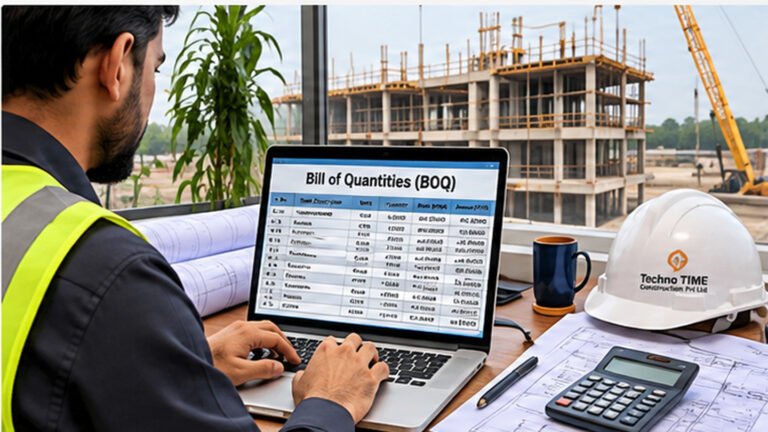
For infrastructure and large civil works, add soil and survey information where available, technical specifications, access constraints, traffic-management expectations and a preliminary Bill of Quantities (BOQ). A BOQ lists measurable work items and estimated quantities, helping everyone price against a common basis.
Explore the relevant construction and engineering services before defining the specialist disciplines your contractor will need.
2. Verify legal identity and applicable PEC credentials
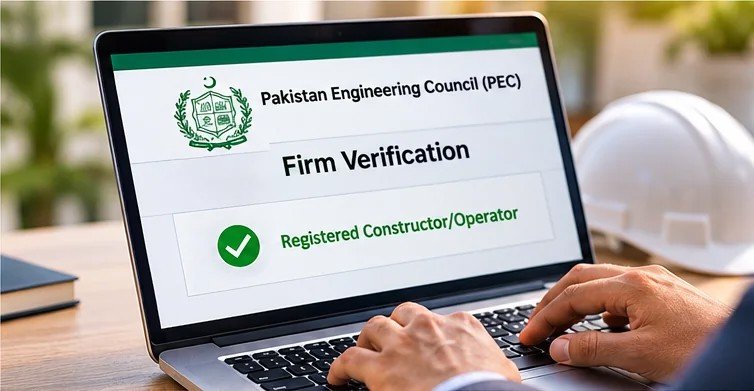
The Pakistan Engineering Council (PEC) regulates engineering practice and operates registration systems for constructor and operator firms. Ask for the contractor’s complete legal name, relevant registration details and supporting corporate and tax information. Where a PEC licence is applicable, verify the category, validity and details against PEC’s official records rather than relying on a screenshot or certificate copy.
PEC’s constructor/operator firm verification portal is a starting point. PEC’s registration documentation guidance also illustrates the types of machinery, organizational and financial evidence used in relevant registration processes.
Important: A licence does not independently prove that the contractor has resources available for your specific project. Check both eligibility and delivery capacity.
3. Match proven experience to the type of work
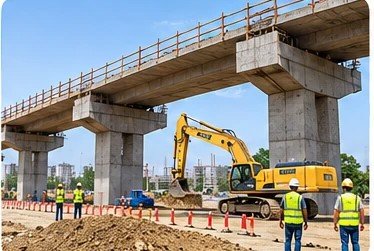
Relevant experience is evidence of executing work similar in scope and complexity to your proposed project. Residential construction, highway earthworks, deep foundations, bridge structures and industrial facilities demand different personnel, methods and equipment.
Ask shortlisted firms for examples demonstrating comparable engineering challenges. Consider the ground conditions, contract size, logistics, testing requirements and working environment. A company may be experienced overall but have limited exposure to the discipline you need.
Techno TIME’s company profile provides background on its history and stated operating capabilities. Evaluate any contractor’s self-description alongside independent records.
4. Verify the project portfolio and the contractor’s role
Project references should identify the client, project location, scope, completion status and the contractor’s responsibility. Photographs alone do not establish contractual involvement or successful handover.
Where appropriate, request completion certificates, references from previous employers, contract award records or permission to inspect comparable work. Distinguish between the main contractor, subcontractor and joint-venture partner. Also distinguish a project award from a completed project.
Review the Techno TIME projects portfolio as an example of how project work can be presented, then confirm any material claims needed for your procurement decision.
5. Review the engineers and the site delivery team
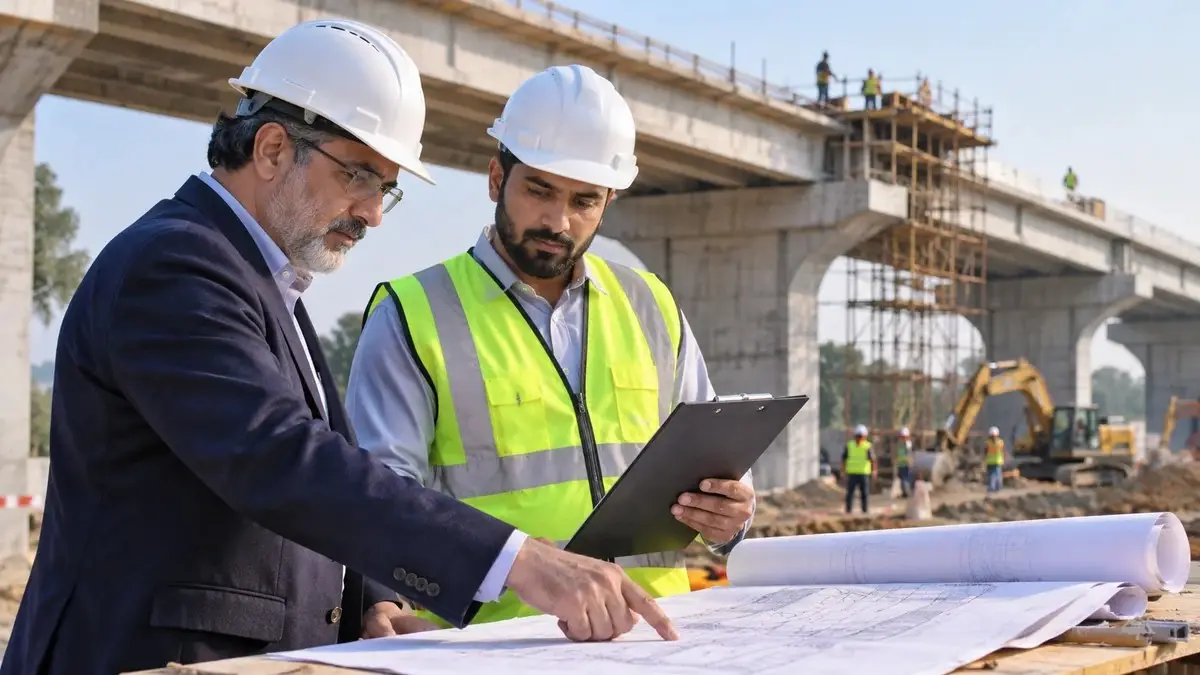
The construction management team turns drawings and specifications into coordinated activities on site. Ask who will act as project manager, site engineer, quantity surveyor, quality inspector and safety supervisor, as applicable to the scope.
Confirm who approves material submittals, manages changes, issues progress reports and resolves discrepancies between drawings and site conditions. For a technically demanding project, review qualifications and availability rather than accepting a general promise of ‘experienced engineers.’
6. Evaluate equipment, workforce and financial capacity

Contractor capacity concerns the resources needed to deliver the programme: staff, machinery, suppliers, subcontractors and working capital. A contractor may own equipment, rent it or obtain specialist services through third parties. What matters is a credible plan for having the right resources available at the right time.
For major contracts, ask about current workload, availability of plant, procurement lead times, financial references and contingency arrangements. Consider whether the proposed schedule is achievable with the stated resources.
7. Compare itemized BOQs and quotation exclusions
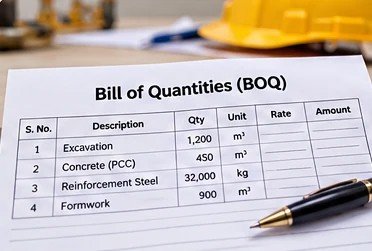
A Bill of Quantities (BOQ) organizes measurable construction work, quantities and rates. Compare the same drawings, technical standards and work items across quotations rather than looking only at a total amount.
| What to compare | Question to ask |
|---|---|
| Work scope | Are the same construction activities included? |
| Quantities | Are measurements based on the same drawings? |
| Materials | Are grades, test requirements and standards clearly stated? |
| Exclusions | Which necessary items are not priced? |
| Taxes and adjustments | How will applicable taxes and price variations be handled? |
| Completion time | Does the bid allow realistic resources and duration? |
The lowest quoted price may reflect efficiency, but it may also reflect missing work, unrealistic assumptions or unclear allowances. Ask bidders to clarify material differences in writing before selection.
8. Check quality-control and site safety procedures
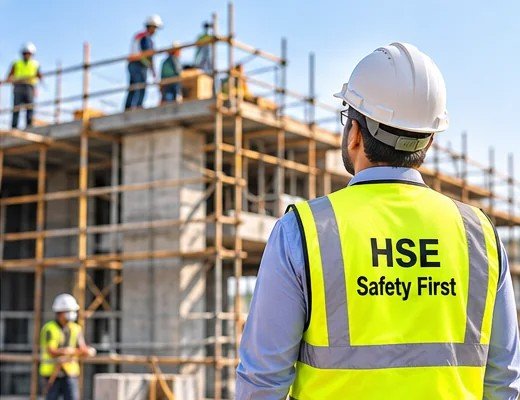
Quality control means testing and inspecting materials and workmanship against approved specifications. A practical quality plan identifies inspection stages, acceptance criteria, responsible personnel and records to be kept.
Construction safety addresses hazards such as excavation instability, work at height, traffic near the site, lifting operations and heavy machinery. Ask for safety methods appropriate to your site, including supervision, access control and incident reporting.
Certification claims should be checked for current validity and applicability. A policy statement is not a substitute for actual implementation.
9. Examine the schedule and progress reporting method
A construction programme shows the planned sequence, dependencies and timing of project activities. Request meaningful milestones for mobilization, structural works, inspections, finishes or handover, depending on your scope.
Agree how progress will be recorded using dated site photographs, inspection results, reports and change logs. Ask how weather delays, unforeseen ground conditions or drawing revisions will be assessed.
10. Review contracts and payment conditions carefully

A construction contract defines the parties’ rights, responsibilities and procedures. Review the final scope, drawings, price, payment certificates, completion obligations, changes, defects, risks and dispute provisions before signing.
- Identify exactly what documents form the contract.
- Specify how variations and additional work will be instructed and valued.
- Agree measurable payment milestones and documentation.
- Define the process for delays, extensions of time and completion.
- Clarify testing, handover, defect rectification and final account procedures.
For substantial or complex projects, obtain project-specific legal and engineering review.
11. Apply the correct rules for public and private procurement
Private contractor selection is generally organized around the project owner’s requirements and applicable law. Federal public procurement is governed by its own mandatory procedures.
Pakistan’s Public Procurement Rules 2026, notified September 28, 2026, apply to procuring agencies of the Federal Government within their stated scope. Rule 41 addresses evaluation criteria, and Rule 42 requires bid evaluation using the criteria and terms specified in the bidding documents. Provincial procurement, international-financier arrangements and individual contracts may have different applicable requirements.
For further context, read our guide to PPRA Rules 2026 for construction tenders. Do not assume federal procurement procedures automatically govern every private construction contract.
12. Meet the actual delivery team before deciding
A final meeting should resolve open technical, commercial and communication questions. Ask the proposed project manager to explain how the team would mobilize, document progress, manage quality and respond to changes.
Assess the clarity of the answers and the quality of supporting evidence. Document how you compared bidders and why the chosen contractor is appropriate for the work.
Construction contractor selection checklist
- ☐ Legal identity and relevant registrations checked
- ☐ PEC constructor/operator details verified where applicable
- ☐ Comparable completed projects and actual role confirmed
- ☐ Engineering team and supervision arrangements reviewed
- ☐ Equipment, workforce and financial capacity evaluated
- ☐ Itemized BOQ, specifications and exclusions compared
- ☐ Quality-control and safety plans reviewed
- ☐ Schedule and reporting expectations agreed
- ☐ Payment, variations, contract terms and handover reviewed
- ☐ Applicable procurement rules identified
Frequently asked questions
How can I verify a construction contractor in Pakistan?
Confirm the legal business identity, check PEC registration where applicable, and independently review relevant project references, personnel and supporting documents. Verification of registration is not a substitute for checking delivery capability.
Does every construction job need a PEC-registered contractor?
The applicable registration and qualification requirements depend on the engineering activity, applicable law and contract. Requirements for a major engineering project are not necessarily the same as those for a minor general repair. Obtain project-specific advice where uncertain.
Should I choose the lowest construction quotation?
Not automatically. Compare bids against identical work scope, quantities, technical requirements, project schedules and contract conditions. Clarify unusual rates and exclusions before deciding.
What documents should I request before hiring a construction company?
Depending on scope, request corporate information, applicable licences, comparable project records, key staff details, equipment and resource plans, itemized quotations, schedules and proposed contract conditions.
How do I evaluate construction contractors for a government tender?
Follow the governing procurement rules and published bidding documents. Federal procuring agencies must use the evaluation criteria and procedures specified under the applicable PPRA framework. Check the relevant provincial or funding-agency rules where appropriate.
Choosing a construction partner
A reliable choice rests on evidence, not a single price or a brochure. Review each shortlisted contractor’s relevant technical capability, project history, management resources and contract proposal, then record the basis for your decision.
Learn more about Techno TIME Construction Pvt Ltd, explore our construction services and project portfolio, or contact our team to discuss the scope and procurement route for your project.
Editorial note: The featured and supporting construction visuals are illustrative, not documentary photographs of Techno TIME projects.