Skip to content
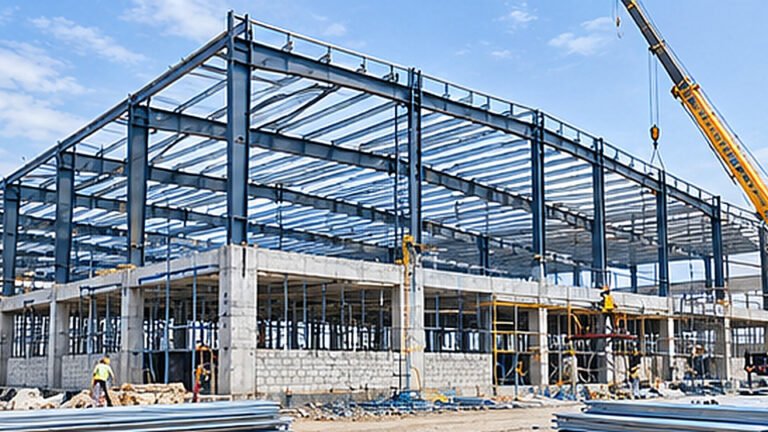
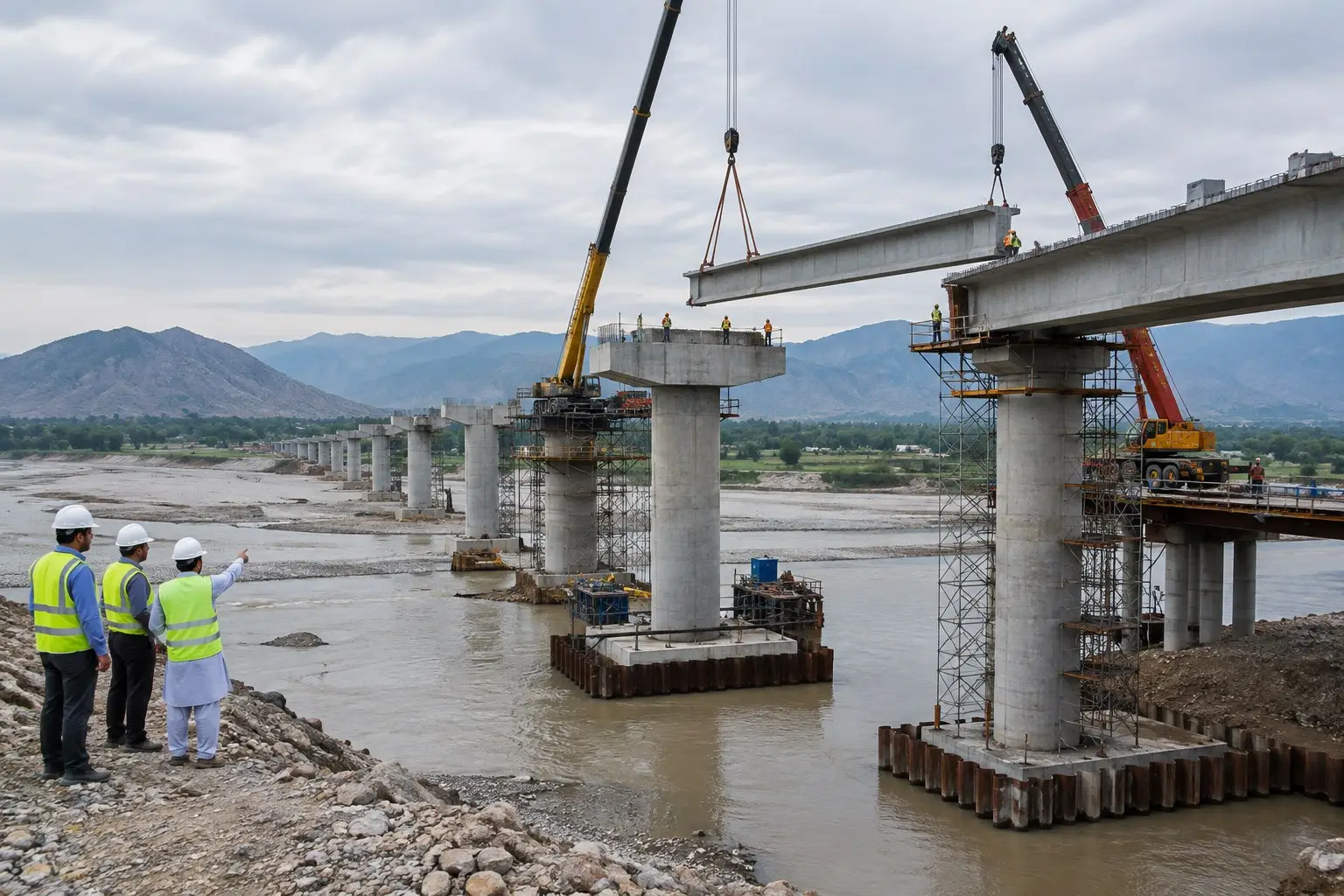
Bridge construction site with concrete piers, girder erection and heavy equipment
Structural Works

Bridge Construction in Pakistan: Planning, Foundations and Quality

A practical guide to bridge construction in Pakistan, covering site conditions, foundations, structural methods, inspections, safety and tender preparation.

Bridge construction is the engineering and building process used to create a structure that carries a road, railway or pedestrian route across an obstacle. In Pakistan, successful bridge construction requires accurate site investigations, appropriately designed foundations, safe construction sequencing and documented quality assurance. The design and construction method depend on the crossing, traffic demands, soil conditions, flood risks, access restrictions and applicable engineering requirements.

What are the main stages of bridge construction?

The bridge construction process normally progresses through feasibility, investigation, detailed design, procurement, foundations, substructure, superstructure, finishing and handover. Every stage must be coordinated with temporary works and traffic management.
  1. Define the purpose and capacity of the crossing.
  2. Investigate ground, water and access conditions.
  3. Choose an appropriate structural system.
  4. Design foundations and temporary works.
  5. Build foundations, piers and abutments.
  6. Construct or erect the superstructure.
  7. Complete the deck, bearings, joints, drainage and approaches.
  8. Inspect, test and hand over the works.

1. Establish bridge feasibility and design requirements

Bridge feasibility evaluates whether the proposed crossing is technically practical and compares possible locations and design concepts. It considers span arrangement, required clearances, traffic loads, available land, cost implications and construction risks. Establish the intended road users, required service life, design criteria and interfaces with the existing network. Technical standards and approvals must be confirmed by the qualified engineering team rather than inferred from similar projects.

2. Investigate ground, water and scour

Illustrative river bridge crossing highlighting water levels and pier exposure
Water conditions affect bridge engineering.
A geotechnical investigation assesses soil, rock, groundwater and conditions affecting foundation performance. A hydraulic assessment investigates water flow, flooding and waterway capacity where the bridge crosses a river or channel. Scour is the erosion of soil around a foundation by flowing water. It matters because the resulting loss of support can threaten bridge stability. Suitable investigations may require boreholes, laboratory tests, groundwater observations, flood records and riverbed surveys. The Federal Highway Administration’s subsurface investigation guidance explains the role of site characterization in transport engineering.

3. Select a structural system

A bridge structural system is the arrangement of load-bearing components that transfers forces across the span and into the supports. Common forms include slab, beam, girder and truss bridges; their suitability depends on span, loading, material availability, access and erection requirements. Consider what equipment can reach the site, how traffic will be managed during construction and how the completed structure will be inspected and maintained. A solution suitable for a rural crossing may not be practical above an operating urban road.
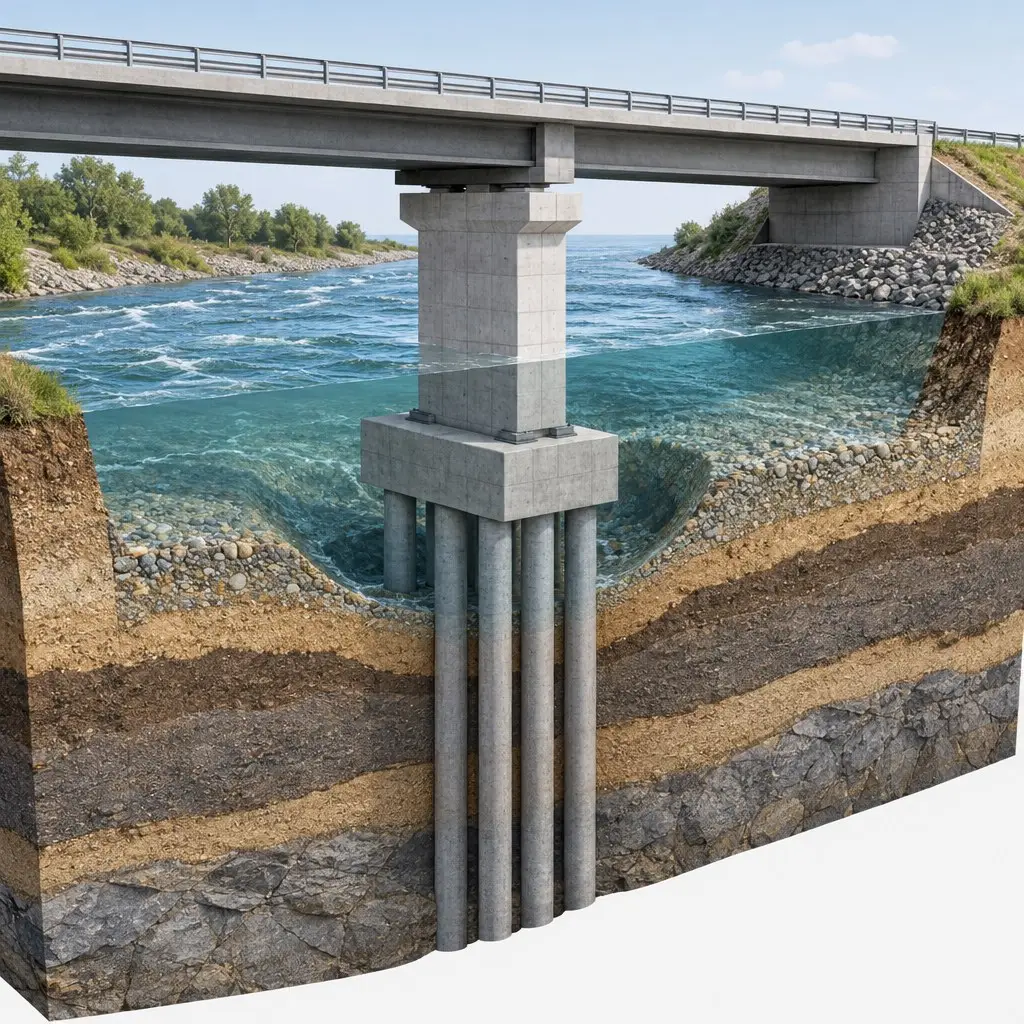
Illustrated bridge pier with pile foundation and scour near riverbed
Conceptual bridge foundation and scour.

4. Design foundations and substructure

Bridge foundations transfer structural loads to supporting soil or rock. The substructure includes the elements, such as piers and abutments, that carry the superstructure and distribute its forces to those foundations. An abutment supports the end of a bridge and forms the connection with the approach embankment. A pier provides intermediate span support. Foundation solutions may use footings, piles or another engineered design depending on ground strength, settlements, loads, groundwater and scour. Foundation dimensions and types must be established from project-specific engineering calculations and site data.

5. Plan temporary works and traffic management

Bridge construction corridor illustrating traffic management and work-site access
Illustrative construction reference for this stage.
Temporary works are structures or systems needed to safely build permanent works, such as falsework, excavation support, access platforms and lifting arrangements. They can create critical risks during construction even when they are absent from the finished bridge. Define material delivery, crane access, lifting plans, work over water or traffic, diversions and emergency arrangements. The construction sequence must respect temporary stability and approved methods. Review related quality, health and safety requirements.

6. Construct the superstructure and deck

Wide bridge view showing deck spans and supporting superstructure
Bridge spans transfer loads to supporting piers.
The superstructure carries traffic loads between supports. It may use precast or cast-in-place concrete, prestressed elements, structural steel or a combination selected by the design team. The bridge deck provides the crossing surface and connects with bearings, joints, barriers, waterproofing and drainage. Installation sequence, concrete quality, dimensional tolerances, temporary support and inspection hold points must be addressed in the approved construction method.

7. Apply bridge quality assurance and quality control

Quality assurance (QA) establishes the planned procedures for achieving contract requirements. Quality control (QC) involves actual inspections, measurements and tests used to confirm that materials and work meet approved specifications. Depending on the structure, checks may cover reinforcement, concrete sampling, piles, steelwork, welding, bearings, levels, deck finishing and drainage. Inspection results and material records should be retained as part of handover. Explore our bridges, flyovers and interchanges construction services.

What belongs in a bridge construction tender?

A bridge tender package is the collection of drawings, investigations, specifications, contract conditions and pricing documents supplied to prospective bidders. A complete package helps contractors price comparable work and identify constraints before submitting an offer.
  • Crossing location, use and design criteria.
  • Available general arrangement and structural drawings.
  • Geotechnical and hydraulic information, where appropriate.
  • Foundation, traffic and access constraints.
  • Materials, testing, safety and quality requirements.
  • Bill of quantities, contract conditions and programme.
  • Bidder eligibility, clarification rules and deadline.

For federal procurement, consult the Public Procurement Regulatory Authority; applicable provincial or project-specific rules must be checked independently.

Related infrastructure planning resources

For road approaches, traffic assessments and pavement considerations, consult our road construction planning guide. To compile the scope, specifications and pricing documents for procurement, see our construction tender requirements checklist.

Common bridge construction risks

Important risks include unsuitable founding materials, flood-related scour, temporary-works instability, restricted lifting access, traffic disruptions and incomplete inspection records. Each should be identified in a project risk register and assigned to the responsible designer, project owner or contractor.

Bridge construction FAQs

How are bridge foundations selected?

Qualified engineers use structural loads, geotechnical data, settlement limits, groundwater and potential scour to select a suitable foundation design.

What is the difference between a bridge pier and an abutment?

A pier is an intermediate span support. An abutment supports the end span and connects the structure with the approach.

Why does scour matter for river bridges?

Flowing water can erode foundation support material, especially during floods. Scour analysis helps evaluate this structural risk.

Which bridge construction tests are important?

Testing depends on approved specifications and may include concrete, steel, reinforcement, foundation, bearing and dimensional checks.

What should a contractor receive before bidding?

Provide drawings, site investigation findings, scope, access restrictions, standards, pricing schedules, procurement rules and relevant deadlines.

Discuss a bridge construction project in Pakistan

Bridge construction is best planned with coordinated investigation, design, procurement and inspection. Submit a tender enquiry with available drawings and project details, or review our civil engineering and consultancy services.
Filed under Structural Works

Share this article

2 comments

Leave a Reply

Your email address will not be published. Required fields are marked *