What are the main stages of bridge construction?
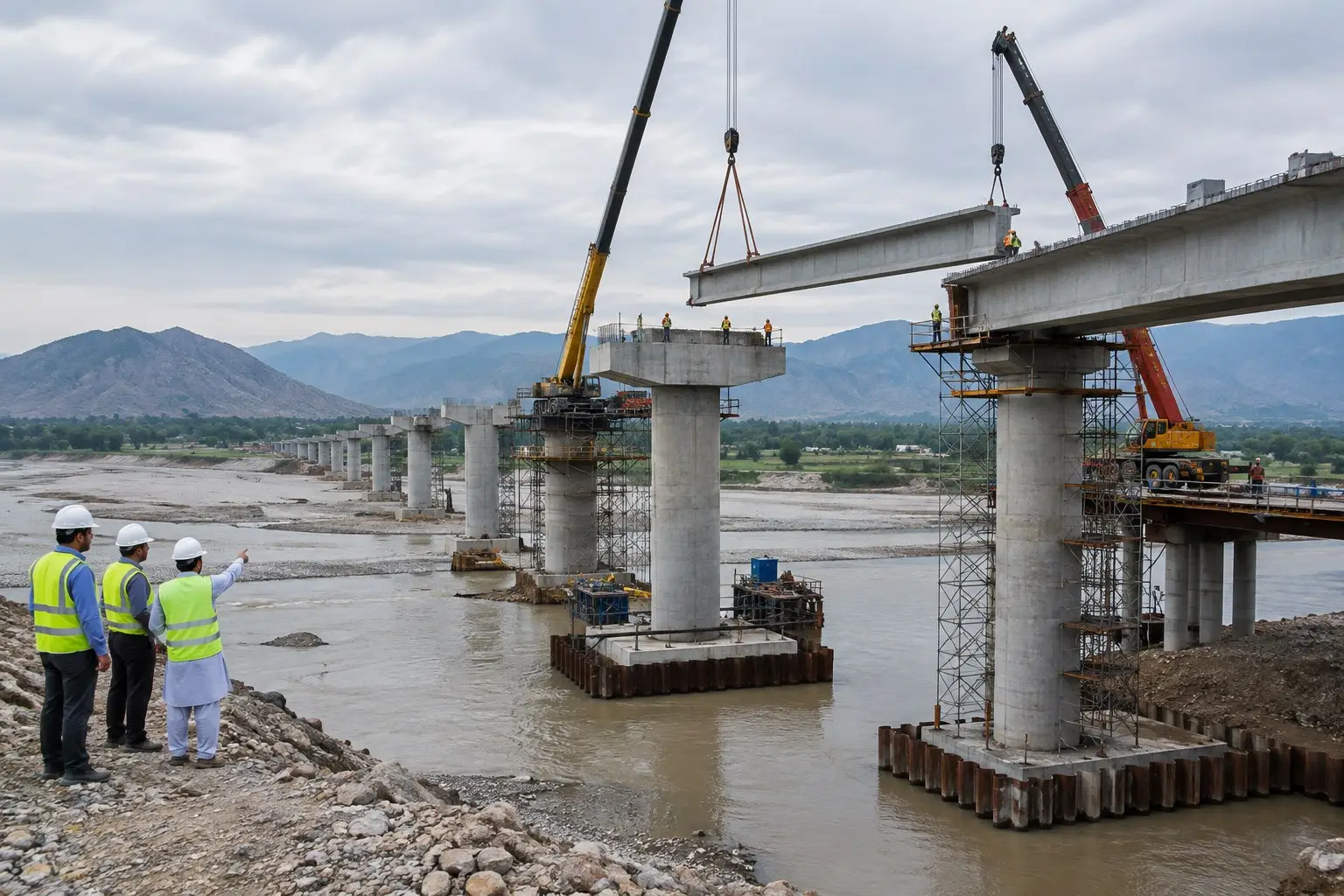
The bridge construction process normally progresses through feasibility, investigation, detailed design, procurement, foundations, substructure, superstructure, finishing and handover. Every stage must be coordinated with temporary works and traffic management.- Define the purpose and capacity of the crossing.
- Investigate ground, water and access conditions.
- Choose an appropriate structural system.
- Design foundations and temporary works.
- Build foundations, piers and abutments.
- Construct or erect the superstructure.
- Complete the deck, bearings, joints, drainage and approaches.
- Inspect, test and hand over the works.
1. Establish bridge feasibility and design requirements
Bridge feasibility evaluates whether the proposed crossing is technically practical and compares possible locations and design concepts. It considers span arrangement, required clearances, traffic loads, available land, cost implications and construction risks. Establish the intended road users, required service life, design criteria and interfaces with the existing network. Technical standards and approvals must be confirmed by the qualified engineering team rather than inferred from similar projects.2. Investigate ground, water and scour

3. Select a structural system
A bridge structural system is the arrangement of load-bearing components that transfers forces across the span and into the supports. Common forms include slab, beam, girder and truss bridges; their suitability depends on span, loading, material availability, access and erection requirements. Consider what equipment can reach the site, how traffic will be managed during construction and how the completed structure will be inspected and maintained. A solution suitable for a rural crossing may not be practical above an operating urban road.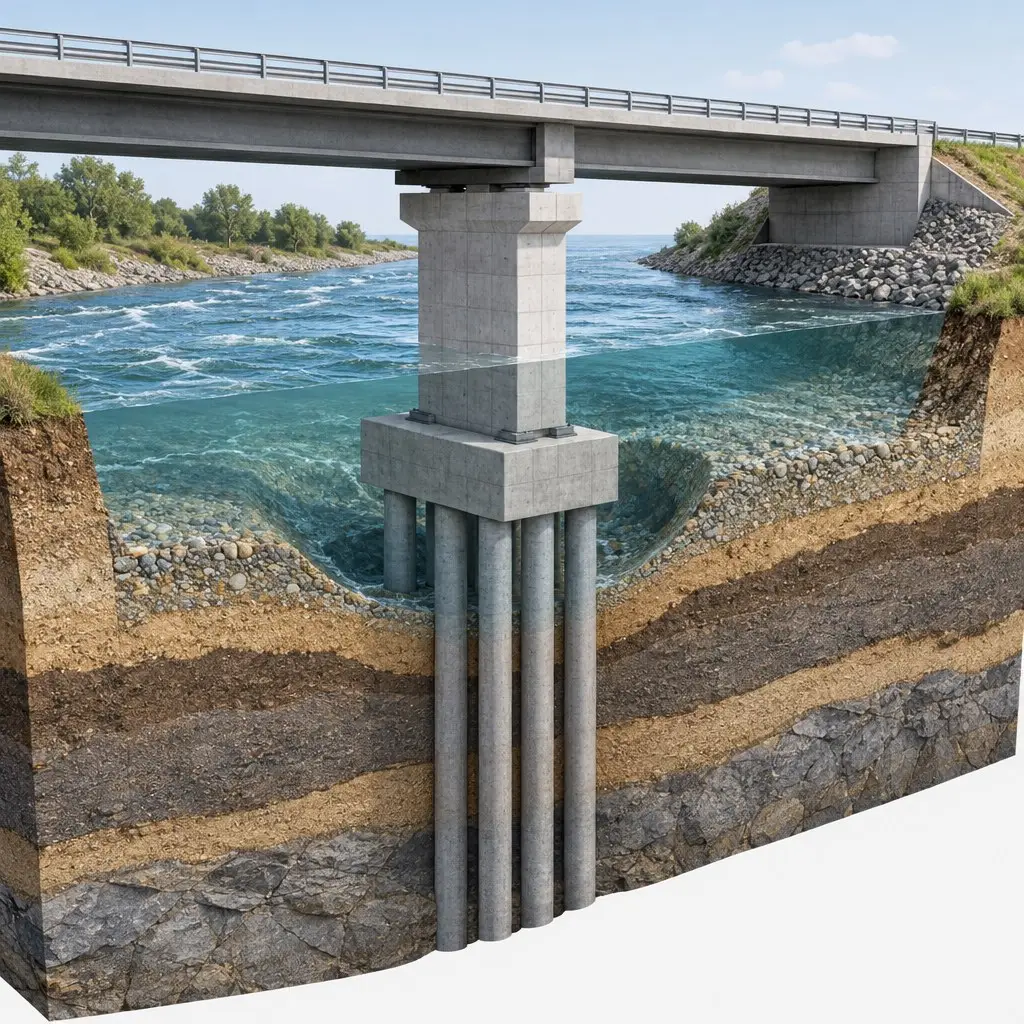
4. Design foundations and substructure
Bridge foundations transfer structural loads to supporting soil or rock. The substructure includes the elements, such as piers and abutments, that carry the superstructure and distribute its forces to those foundations. An abutment supports the end of a bridge and forms the connection with the approach embankment. A pier provides intermediate span support. Foundation solutions may use footings, piles or another engineered design depending on ground strength, settlements, loads, groundwater and scour. Foundation dimensions and types must be established from project-specific engineering calculations and site data.5. Plan temporary works and traffic management

6. Construct the superstructure and deck

7. Apply bridge quality assurance and quality control
Quality assurance (QA) establishes the planned procedures for achieving contract requirements. Quality control (QC) involves actual inspections, measurements and tests used to confirm that materials and work meet approved specifications. Depending on the structure, checks may cover reinforcement, concrete sampling, piles, steelwork, welding, bearings, levels, deck finishing and drainage. Inspection results and material records should be retained as part of handover. Explore our bridges, flyovers and interchanges construction services.What belongs in a bridge construction tender?
A bridge tender package is the collection of drawings, investigations, specifications, contract conditions and pricing documents supplied to prospective bidders. A complete package helps contractors price comparable work and identify constraints before submitting an offer.- Crossing location, use and design criteria.
- Available general arrangement and structural drawings.
- Geotechnical and hydraulic information, where appropriate.
- Foundation, traffic and access constraints.
- Materials, testing, safety and quality requirements.
- Bill of quantities, contract conditions and programme.
- Bidder eligibility, clarification rules and deadline.


2 comments