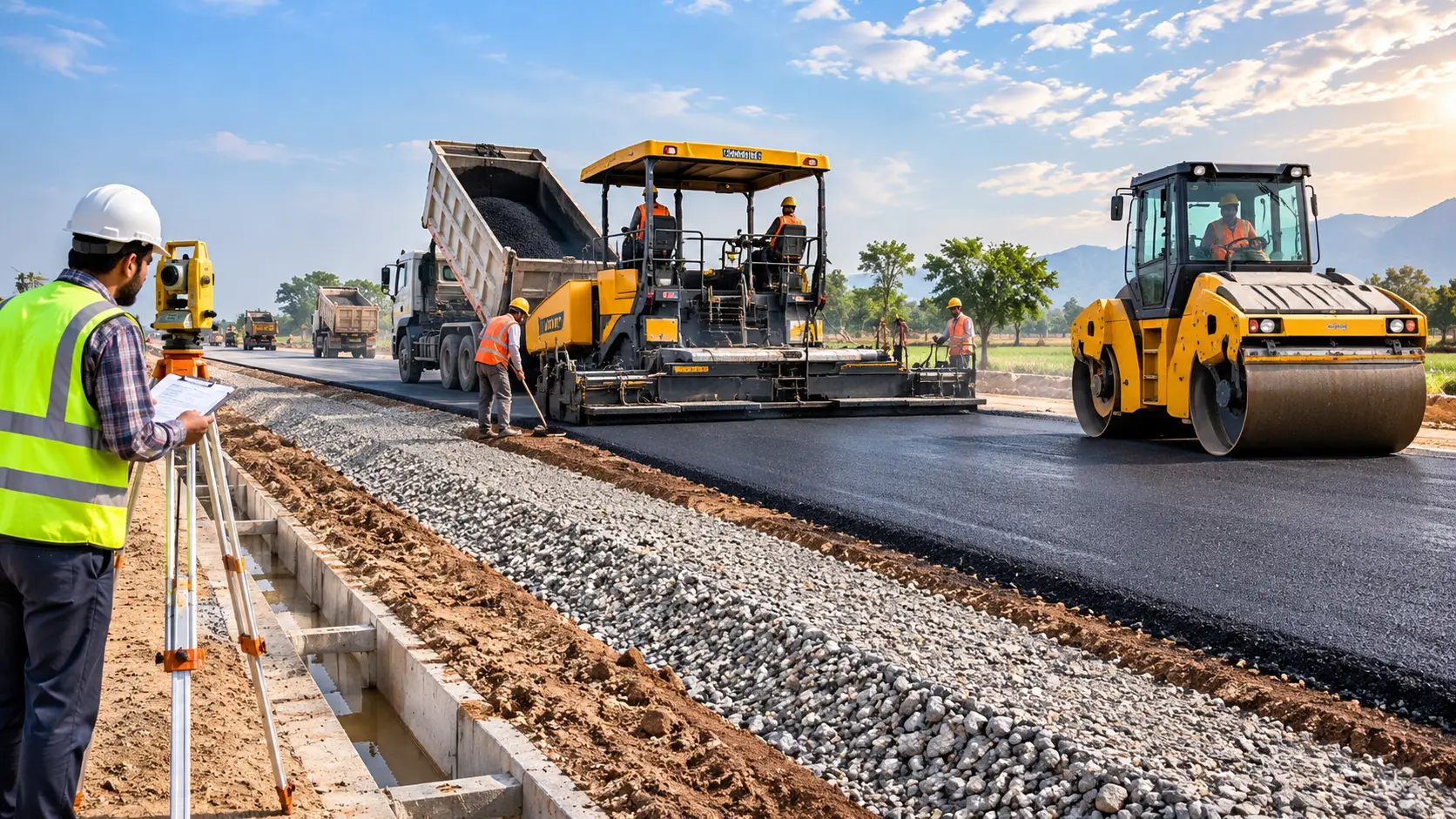
Road construction cost in Pakistan is the estimated amount required to build or rehabilitate a road after accounting for its dimensions, pavement materials, ground conditions, drainage, labor, machinery, and site-specific work. There is no reliable single price per kilometre for every road in Pakistan, because a narrow rural link, an industrial access road and a multi-lane highway have very different engineering requirements.
For a useful budget, the road’s length and width must be combined with actual layer thicknesses, a measured bill of quantities (BOQ), current local unit rates and project risks. This guide explains the factors behind road-construction prices, shows a transparent quantity example, and identifies what to check before asking a contractor for a quote.
How much does it cost to build 1 km of road in Pakistan in 2026?
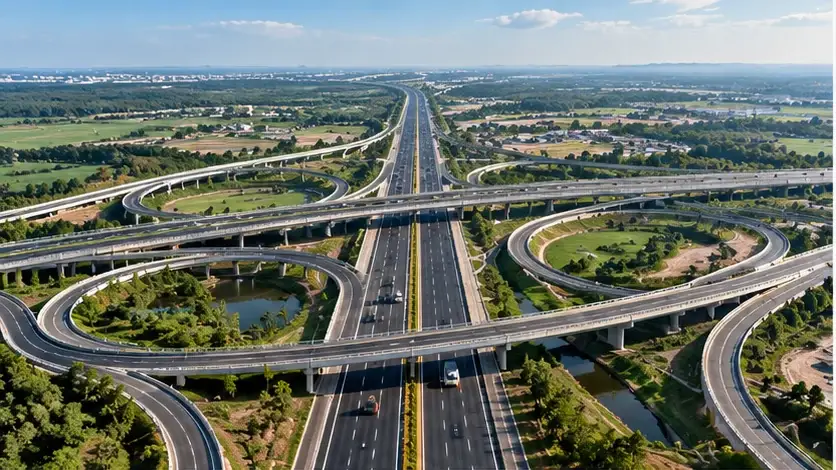
Road construction cost per kilometre is a project estimate divided by the completed road length. It is useful for comparing broadly similar projects, but it cannot replace a detailed estimate because the width, pavement, bridges, earthworks and land conditions may be different.
In a July 2026 report on a Senate committee discussion, officials referred to an approximately PKR 70 million per kilometre figure for certain road works in Khyber Pakhtunkhwa. The same discussion raised questions about project totals and separate bridge expenditure. The report also quotes 770 km of work for PKR 69 billion, which does not reconcile to the stated PKR 70 million per km, so the reported figures require clarification. This is not a verified nationwide unit rate or a quotation and should not be applied to another project without a checked project scope and cost breakdown. Read the July 2026 project-cost report.
For a proposed road, request a cost breakdown based on the exact location, design, and BOQ. Where surveys or specifications remain incomplete, an indicative budget should state its assumptions and uncertainty rather than implying that a preliminary figure is final.
What factors affect road construction cost in Pakistan?
Road-construction cost drivers are the technical and commercial conditions that determine the quantities, unit rates and work needed to complete a road. The largest differences often come from pavement design, ground preparation, drainage, site access and structures rather than the kilometre measurement alone.
- Road dimensions: carriageway width, shoulders, intersections and additional lanes determine the constructed area.
- Traffic and design loading: heavy trucks may require a different pavement structure from lightly loaded traffic.
- Subgrade and earthworks: weak soil, deep cuts, fills or slope protection increase construction activities.
- Pavement type and thickness: asphalt, concrete, aggregate layers and material specifications affect material and equipment requirements.
- Drainage and structures: culverts, retaining walls and water-management works can materially change the scope.
- Material transport: distances from quarries, asphalt plants and concrete suppliers influence delivered rates.
- Project conditions: urban utility relocation, traffic diversions, safety controls, procurement and timelines affect the budget.
These factors should be evaluated together. For example, poor drainage can change the subgrade condition and lead to a different pavement solution, while a bridge included in a road package may dominate the total cost.
How do soil conditions and earthworks affect road cost?
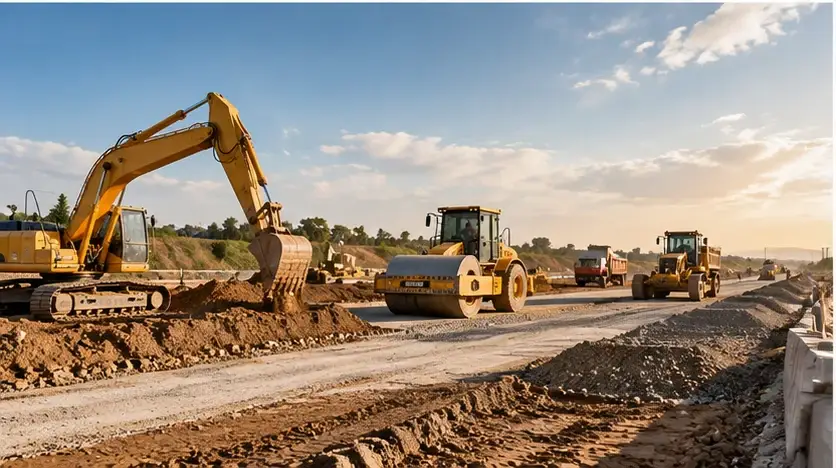
Earthworks are the excavation, movement, filling and compaction of soil needed to create the designed road formation. Their cost depends on the ground levels, quantity of cut and fill, material suitability, haul distance and ground-stabilization requirements.
The subgrade is the prepared ground foundation beneath the pavement layers. If it is weak, excessively wet or variable, the design may require soil replacement, improved drainage or stabilisation. A geotechnical investigation identifies relevant soil and groundwater properties so the road is not priced using assumptions that later prove incorrect.
Topographic surveys and site investigations should be completed to an appropriate stage before major earthwork quantities are committed. Our road construction planning guide explains the survey and feasibility decisions in greater detail.
How do asphalt, concrete and pavement layers change the budget?
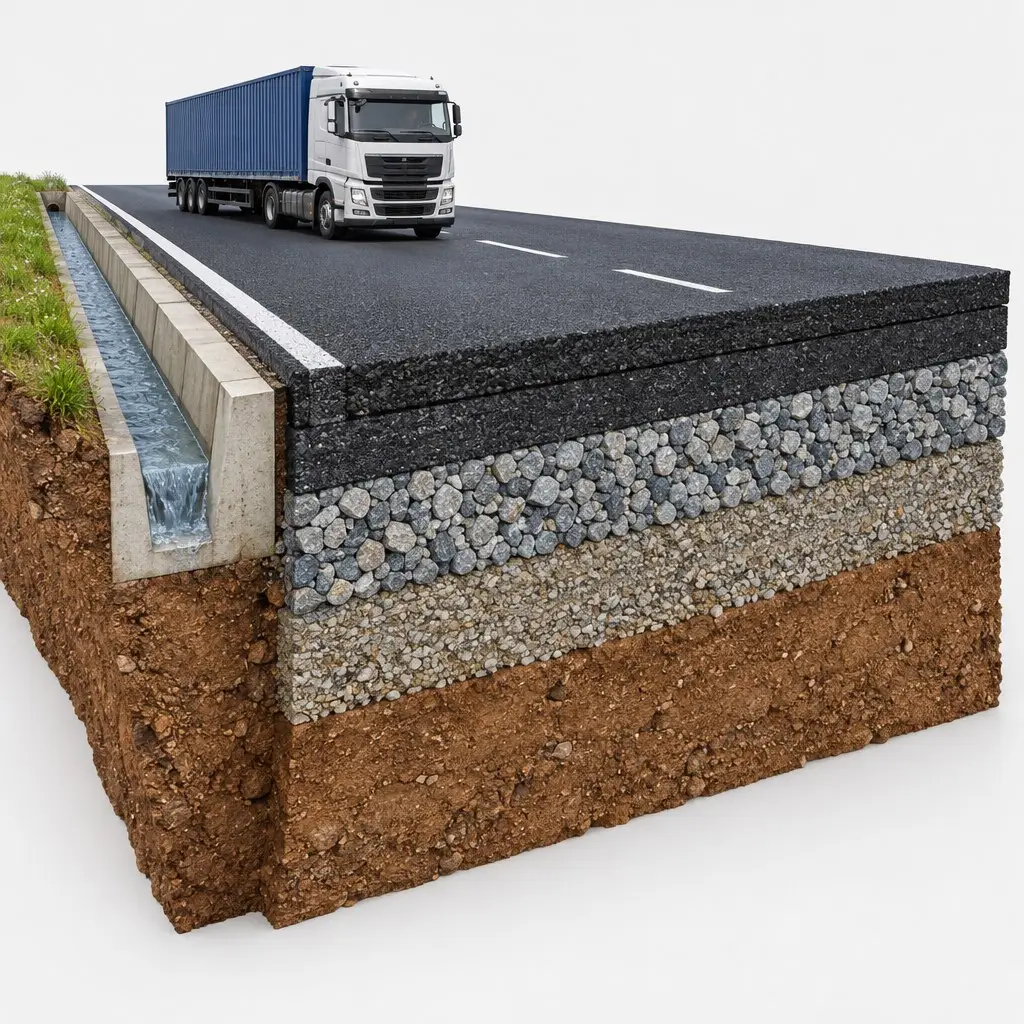
Pavement design determines the materials and layer thicknesses required to carry the anticipated traffic over the intended service period. It directly affects the quantities of asphalt, concrete, crushed aggregate, and preparation work in the cost estimate.
Flexible pavement typically uses asphalt-bound surfacing supported by granular or treated layers. Rigid pavement uses a concrete slab as the main structural component. Their first costs, equipment requirements, joint details, maintenance needs and expected rehabilitation activities differ.
The wearing course is the upper layer exposed to traffic and weather; the base course distributes loads below the surfacing; and the subbase supplies additional support or separation where required. A contractor’s quotation should state each specified layer, its thickness, measurement unit and associated testing requirement.
| Cost component | Why the quantity or rate changes |
|---|---|
| Asphalt surfacing | Area, designed thickness, mix specification, production and delivery |
| Concrete pavement | Slab dimensions, concrete requirements, joints and curing |
| Granular base and subbase | Thickness, material grading, hauling and compaction |
| Subgrade preparation | Soil condition, trimming, testing and stabilization |
| Testing and quality control | Required sampling, density checks and material compliance |
The lowest initial surfacing price is not automatically the most economical choice. The Federal Highway Administration’s life-cycle cost guidance explains how initial construction and future maintenance and rehabilitation costs can be evaluated together.
How much does road drainage add to construction cost?
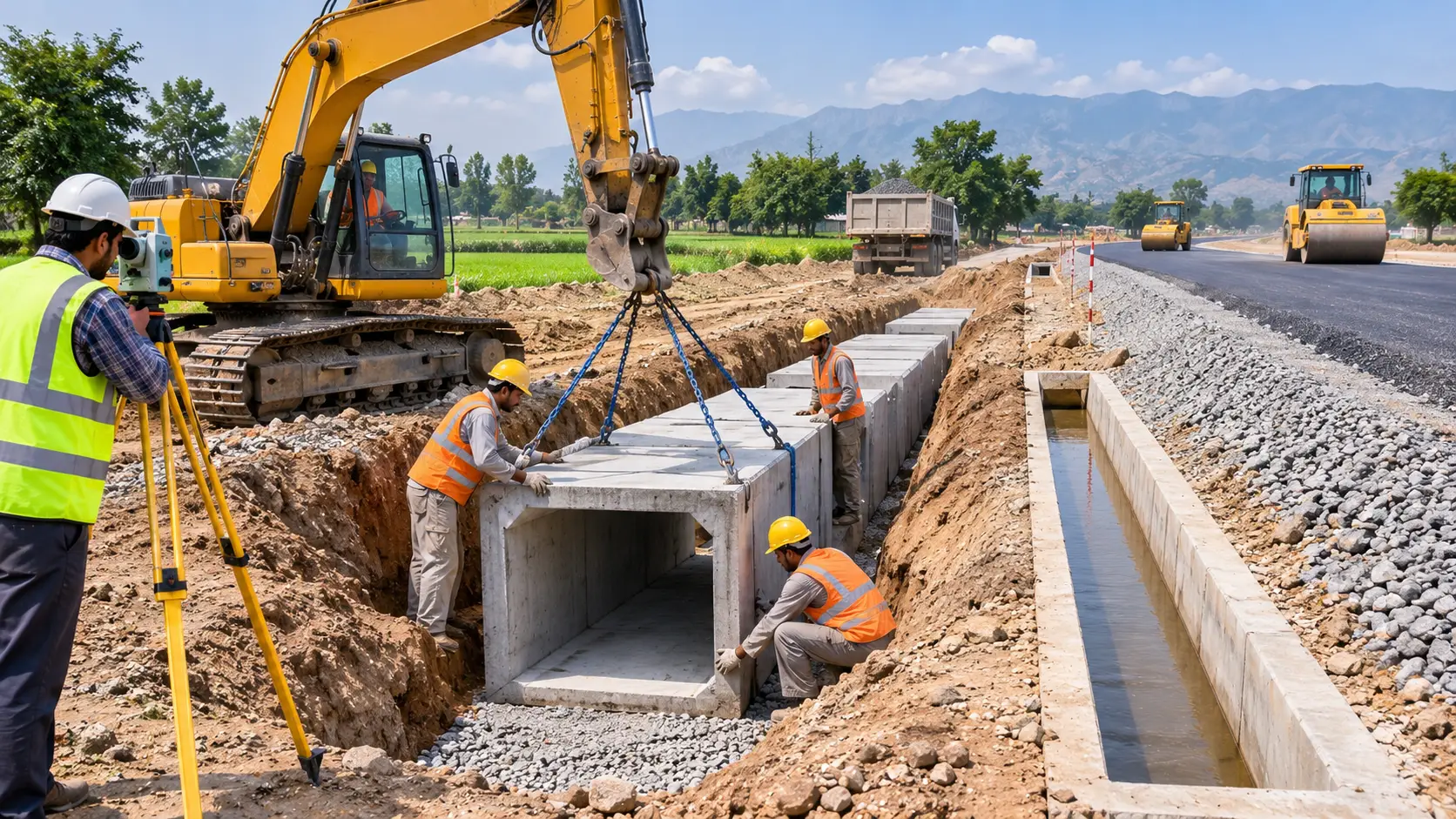
Road drainage is the designed system for collecting and carrying water away from the road and supporting soil. Its cost depends on rainfall and flood conditions, terrain, side drains, culverts, outlets, erosion protection and any needed subsurface drainage.
A culvert carries water beneath a roadway; a side drain guides runoff along the route. Both are measured separately from the pavement area where they form part of the BOQ. Failing to account for them can make a per-kilometre estimate look artificially low and increase the risk of later damage.
Flood-prone and low-lying sites deserve particular attention. Hydraulic design and drainage quantities should be established from the actual catchment, levels and project criteria.
Sample BOQ: how do you estimate quantities for a 1 km road?

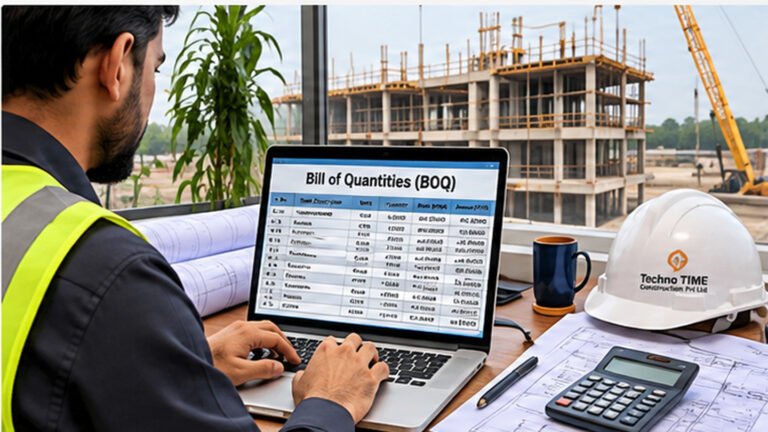
A bill of quantities (BOQ) is a measured schedule of construction work items used to prepare rates and compare contractor prices. The following example demonstrates the arithmetic for a hypothetical 1,000-metre-long road with a 7-metre-wide paved carriageway. It is not a recommended pavement design or a project quotation.
| Illustrative measurement | Calculation | Quantity |
|---|---|---|
| Carriageway surface area | 1,000 m × 7 m | 7,000 m² |
| 50 mm asphalt layer, compacted geometric volume | 7,000 m² × 0.05 m | 350 m³ |
| 200 mm granular layer, compacted geometric volume | 7,000 m² × 0.20 m | 1,400 m³ |
These volumes are geometric quantities only. Actual BOQ quantities, asphalt mass, wastage allowances, density conversion, shoulders, junctions, side drains, culverts and construction tolerances must be determined from the drawings and specifications. For asphalt, a mix density and the specified measurement method are needed before a mass in tonnes can be established.
Estimated construction cost = sum of (measured BOQ quantity × verified unit rate) + applicable preliminaries, project allowances and other defined costs. The contractor and engineer should check what is included in each rate, particularly transport, testing, traffic management and taxes.
For guidance on assembling scope, drawings and pricing schedules, consult our construction tender requirements checklist.
Where can current road material rates in Pakistan be checked?
Construction unit rates are prices for specified measured work, such as a cubic metre of excavation or a tonne of asphalt under defined conditions. They should be drawn from the applicable current rate schedule, supplier quotations, local market evidence and recent comparable tenders where available.
The Pakistan Bureau of Statistics price-statistics portal publishes construction-related price information and price indices. These figures are useful for market context and inflation monitoring, but retail market data should not be confused with complete highway-construction BOQ rates.
A published schedule of rates can provide an estimating reference, yet its date, geography, specifications, and inclusions must be checked. District-specific or historical schedules should not be presented as verified November 2026 turnkey prices. Bitumen, diesel, aggregates, cement, haulage and labor can change at different times, so quotes should state a clear pricing date.
How should public-sector road tenders be priced and compared?
Public-sector road procurement is the regulated purchasing of road works by a government procuring agency. Bid prices must be evaluated against the defined scope, specifications, qualifications and process in the applicable tender documents rather than compared only as bare per-kilometre figures.
For federal procuring agencies, review the Public Procurement Rules 2004 (as amended) and the applicable current PPRA instructions on procurement planning, bidding documents and evaluation. Provincial road projects may be governed by different rules, which must be checked for the relevant department.
In commercial comparisons, review whether a bid includes earthworks, road safety, structures, laboratory tests, access restrictions, temporary diversions and project supervision. Distinguish provisional sums and excluded items. A low quoted rate may not be a low total price if essential works are omitted.
How can a road project’s total cost be controlled?
Construction cost control means monitoring quantities, rates, risks and approved scope changes so the delivered work remains within an appropriately developed budget. It is most effective when engineering information and responsibilities are clarified before tendering.
- Complete surveys and soil investigations early enough to reduce avoidable redesign.
- Compare pavement alternatives using the same traffic, service life and performance assumptions.
- Design drainage and access works alongside the carriageway rather than as late additions.
- Obtain current supplier and transport quotations for the specified materials.
- Use consistent BOQ units and clear inclusions when comparing contractors.
- Plan inspection and testing to prevent costly rework.
- Document changes, variation approvals, and actual quantities during execution.
A life-cycle cost analysis (LCCA) compares the cost of different viable options over an identified analysis period, including anticipated maintenance and rehabilitation. Its objective is not simply to find the cheapest first construction price; it is to compare cost and required performance consistently. See the FHWA pavement life-cycle cost resources.
Road construction cost in Pakistan: frequently asked questions
What is the road construction cost per kilometre in Pakistan?
There is no universally reliable per-kilometre rate. The project needs an agreed road width, pavement specification, ground investigation, drainage scope, and current BOQ rates before a meaningful estimate can be prepared.
Does road construction cost include land acquisition?
It depends on the stated project scope and estimate. Land acquisition and right-of-way costs may be budgeted separately from physical road construction, so inclusion should be confirmed before comparing cost figures.
Is asphalt cheaper than concrete for road construction?
The relative initial cost depends on layer design, site conditions, local material supply, and required construction methods. A fair comparison also considers maintenance, rehabilitation and expected traffic performance over the road’s service life.
How is asphalt quantity calculated for a road?
A geometric volume is calculated by multiplying pavement area by compacted thickness in metres. To convert that volume into tonnes, use the approved asphalt mix density and the contract measurement requirements, with appropriate allowances verified by the estimator.
Why do two contractors quote different prices for the same road?
Prices can differ because of material sources, haul distances, equipment, productivity, overheads, risk pricing, and scope assumptions. A comparison is valid only after exclusions and quantities have been reconciled.
How can I get an accurate road construction quotation?
Provide the project location, road dimensions, survey data, pavement design or available specifications, drainage requirements, BOQ, and target programme. If details are preliminary, request an estimate with explicit assumptions rather than a final fixed price.
Request a road construction estimate from Techno TIME
Road construction budgets are more useful when the scope, design criteria, and project risks are made clear. Techno TIME Construction Pvt Ltd provides roads and highways construction services and related civil engineering and consultancy support in Pakistan.
For a project-specific discussion, send your road construction enquiry with the location, length, width, design documents and available BOQ. The team can review the submitted information and identify the appropriate next steps.

4 comments